
CT Scans
TECHNOLOGY
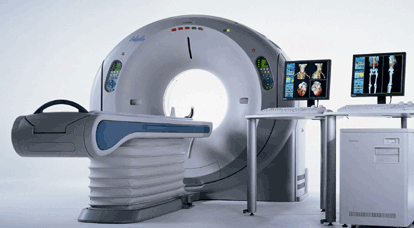
Computed Tomography (CT) is a technology that can image structures of the body, including bone, soft tissue and blood vessels. A CT (or CAT) scanner combines a rotating x-ray tube and a computer to produce high-resolution, cross-sectional images.
APPLICATIONS
SCREENING
CT technology is used to screen for coronary artery disease, lung cancer and colon cancer. It can also identify aortic aneurysms, gall- and kidney stones and osteoporosis in the asymptomatic stage. Please see our Screening Exams section for more information.
DIAGNOSTIC
CT is particularly suited to evaluate bony anatomy, including fractures, loose bodies in joints, and osteoarthritis.
It can be used to obtain information on body organs such as the liver, kidney, pancreas, liver and adrenal glands. A contrast medium with the CT scan highlights blood flow and identifies tumours and abnormalities. CT surpasses MR for the evaluation of lung disease and is a stunning new tool in coronary angiography. CT can be used to evaluate problems in the spine such as tumours, fractures and spinal stenosis. Herniated discs in the lumbar region can also be identified. A CT scan can also be used for sinuses and the mandible/maxilla prior to dental implants.


